Massively increase efficiency
Efficiency in dentistry isn’t about working faster. If that’s your focus then you’re on the road to burnout.
Efficiency is about completing your work in the minimum time with the least possible stress and effort. Efficient dentists don’t work hard yet they turn out prodigious quantities of dentistry.
To highlight that, here’s a fact I find strange: producing $8,000 in a day can often be less tiring than producing $1,500.
A dentist grinding through the day in an inefficient practice goes home exhausted and produces far less than a dentist working in an efficient practice. Effort and output aren’t related the way most dentists assume.
In an $8,000 a day practice everything is streamlined. In a $1,500 a day practice it is like trying to run through quicksand. I go deeper on that in this article.
A useful starting point to become more efficient is honest self-assessment.
Do you leave the practice feeling wrung out even on days the appointment book wasn’t that full?
Do you eat lunch at your desk, or not at all?
Is your production stuck at the same number it’s been for years, no matter how hard you push?
Do you find yourself regularly apologising to patients for running late?
If any of that sounds familiar, the problem is most likely not your work ethic. It’s how your practice is organised.
Across my career, I ran two very different practices. One was a high-volume family clinic, the other a state-of-the-art adult restorative practice. Both were highly productive and even though the business model for each was different, there were common factors in the operational methods.
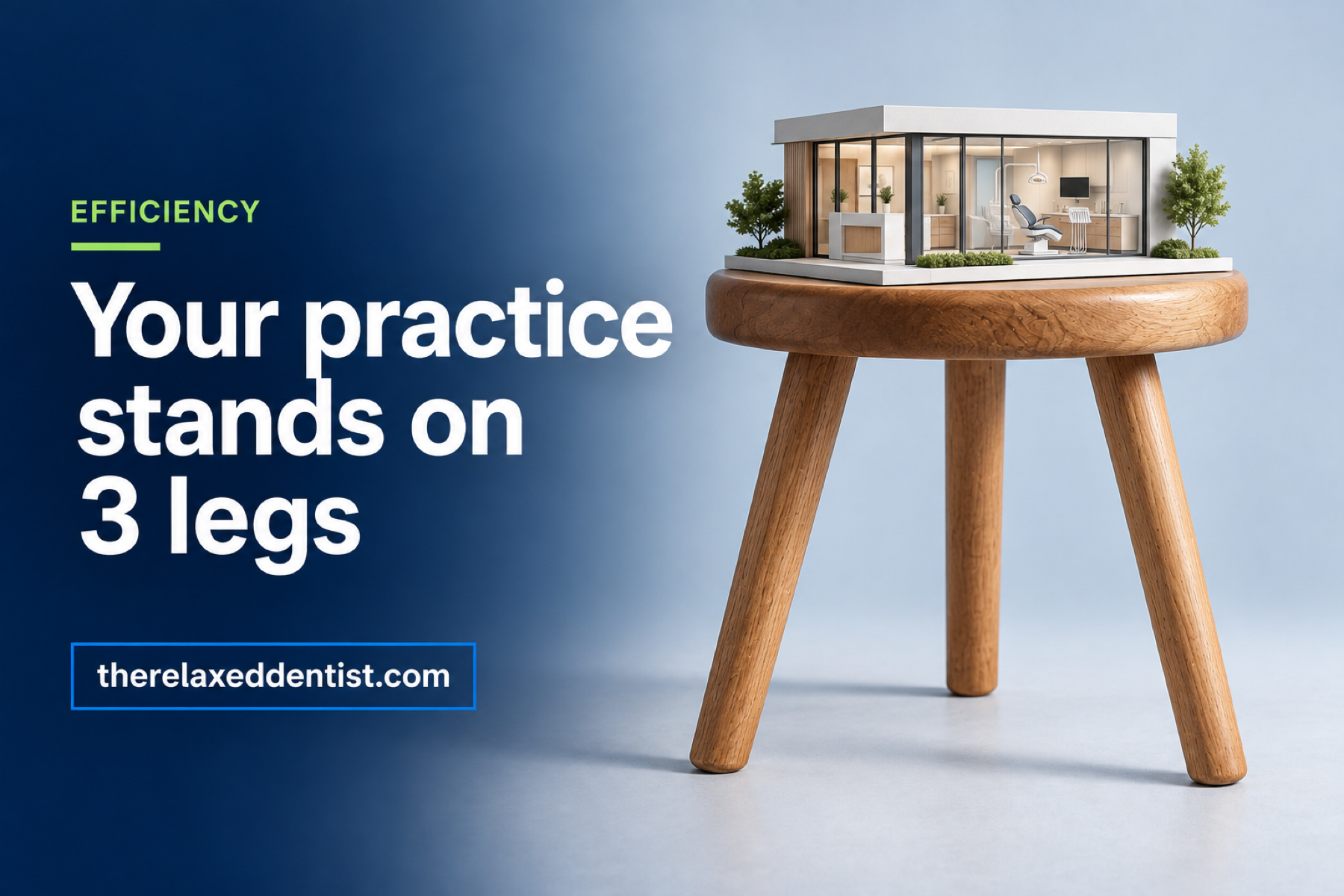
The productivity method I utilised in both practices has four factors: Materials (and equipment), Team, Dentist and Systems. Every efficient day and every exhausting one can be traced back to how well those four line up.
A lot of inefficiency starts with inadequate materials and equipment.
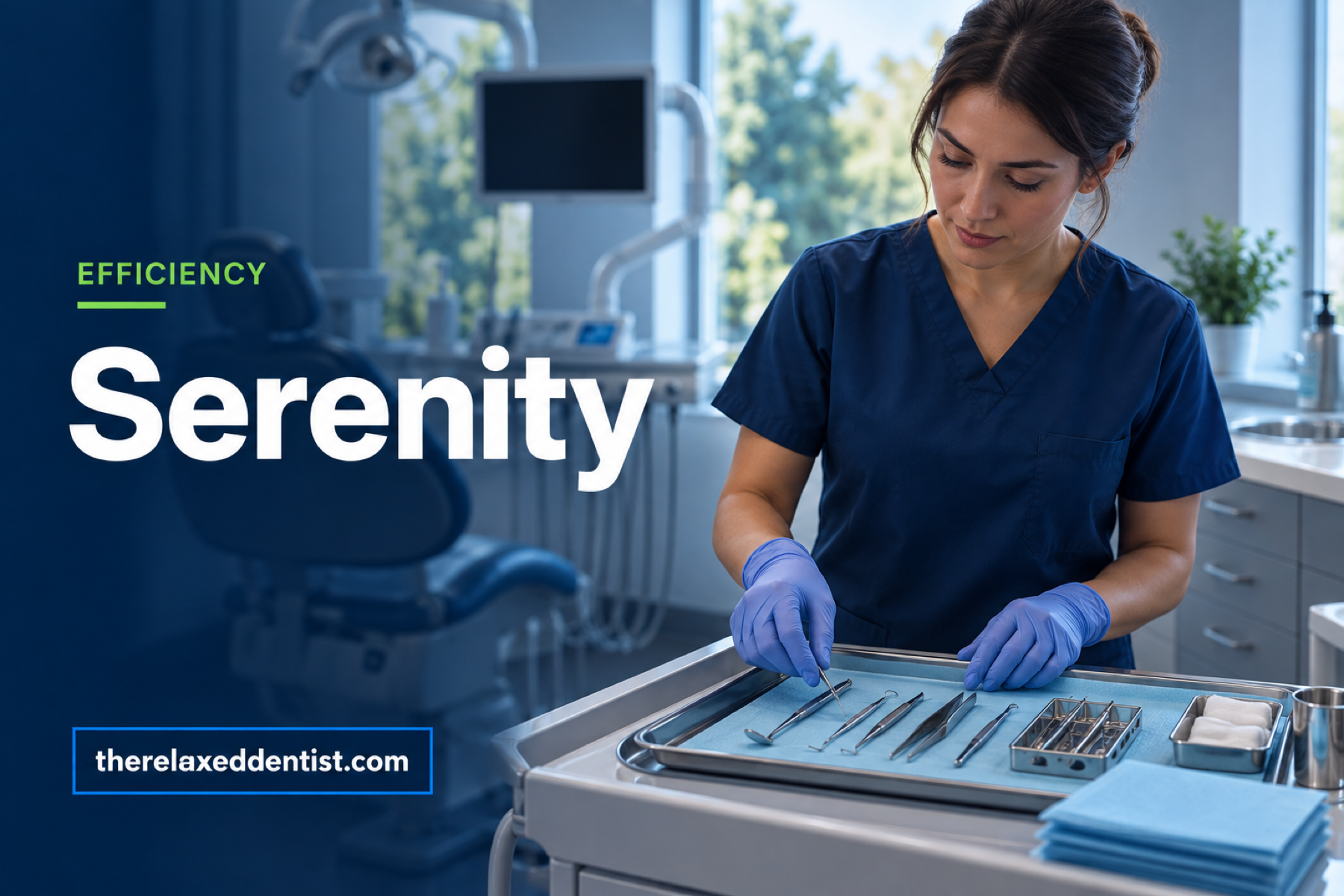
Slow set up times are a killer. If you don’t have instruments organised right a 15 minute root filling setup time can ruin your morning.
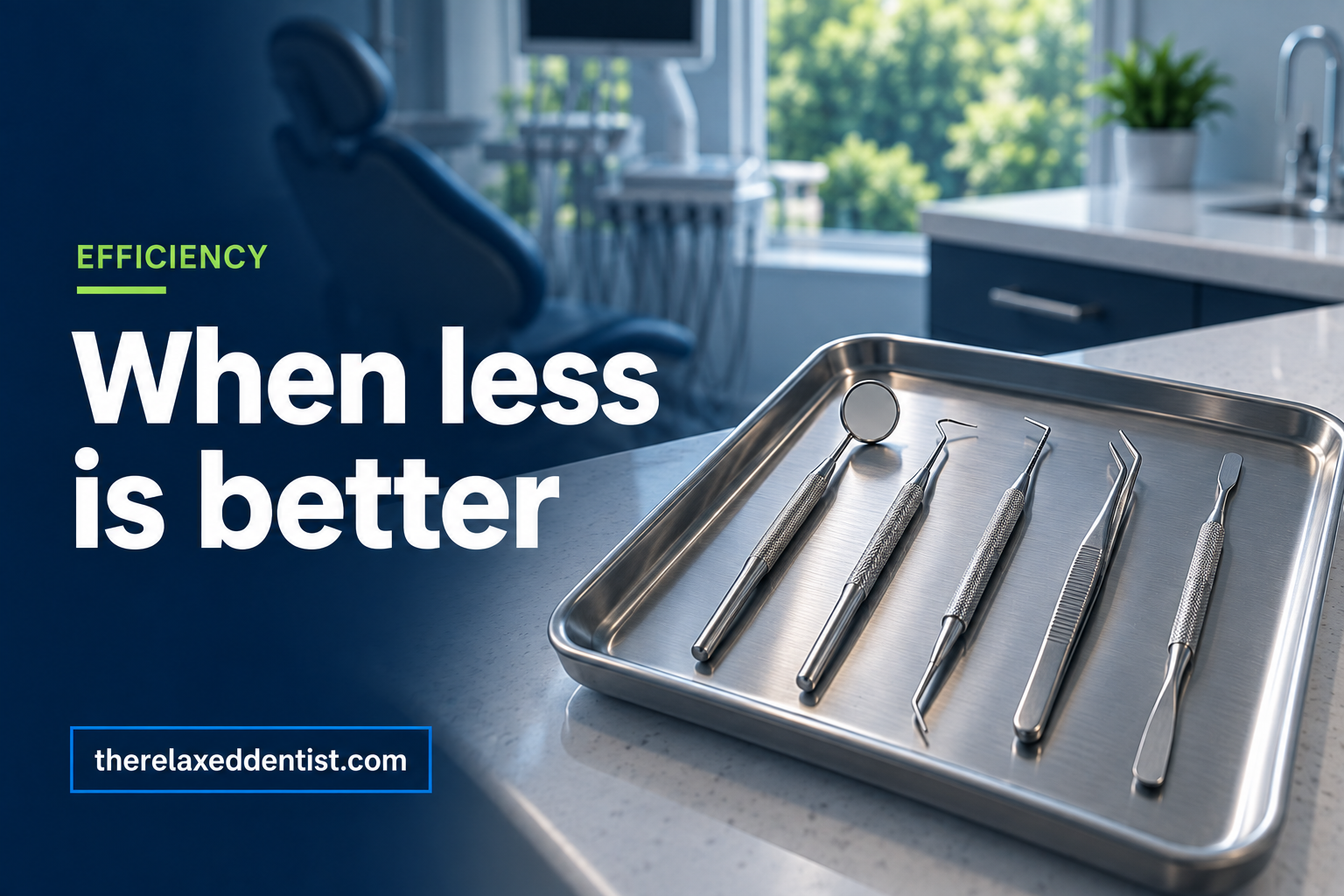
Having too many instruments is common and creates clutter and confusion. The same applies to burs. Dentists tend to accumulate them the way some people accumulate spanners in a shed, one for every situation that might arise. In practice, having too many burs slows you down because every extra option is a decision you have to make mid-procedure. Fewer choices, made in advance, beat more choices made on the fly.
The functionality of equipment is important. Many dentists own an expensive car yet have old, worn-out equipment. They trade their time and clinical efficiency for a few dollars saved on their leasing bill.
Next comes team. Nine out of ten practices I’ve visited are understaffed, and I think that’s a realistic estimate. Dentists convince themselves that adding a second nurse is an indulgence, another salary for not much return.
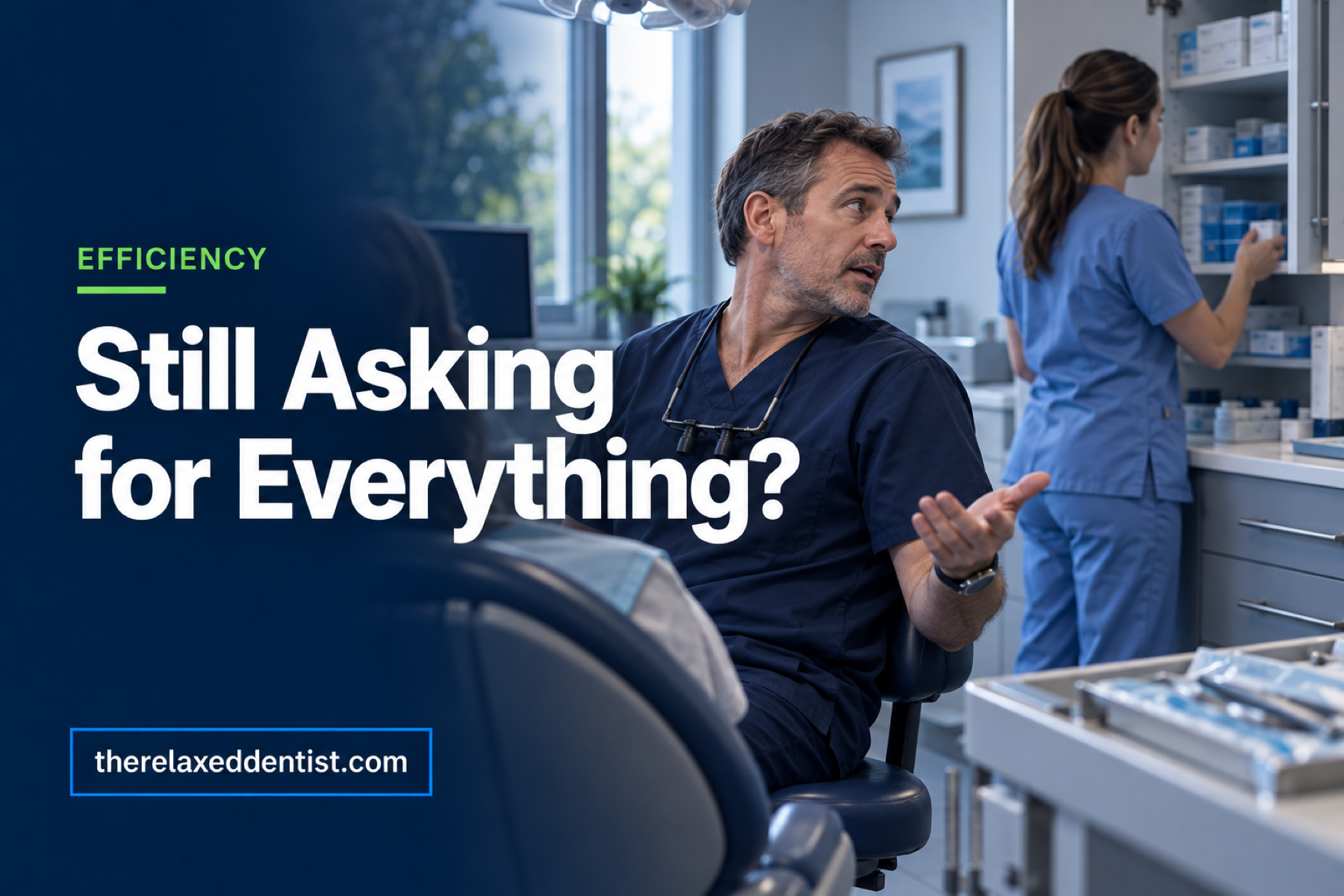
A dentist working with one under-trained and overstretched nurse ends up doing the nurse’s thinking as well as their own: fetching things, repeating instructions, carrying the cognitive load for two people.
Two nurses who are properly trained and know the sequence without being told change the rhythm of a day. The dentist works continuously diagnosing and treating patients. There are no pauses, no delays, just production.
The third factor is the one dentists don’t like to hear about, because it’s them.
How you move, how you sequence a procedure, how many small decisions you make per hour, all of it either adds friction or removes it. I can often tell how efficient a dentist is from the sound of their handpiece: continuous means they know exactly what’s coming next, stop-start means they’re deciding as they go.
The best crown preparation I ever did took fourteen minutes from when the patient sat down to when the patient sat up. It was possible because there was nothing in that sequence I hadn’t thought through. Efficient dentists aren’t the ones who work fastest. They’re the ones who’ve pre-decided the most, so there’s nothing left to decide at the chair and they can move from one step to the next seamlessly.
Materials, team and dentist all rely on the fourth factor to hold them together: systems.
You need a practice manual that new staff can actually follow. You need staff meetings that solve problems instead of just reporting them. You need unambiguously assigned roles. You need ways to cover for when someone’s away.
I’ve watched dentists lose two hours a day to what I call time sucks: small, avoidable friction points that individually feel trivial and collectively wreck a schedule. None of them get fixed by trying harder. They get fixed in a system, and then they stay fixed.
Years ago I worked 5½ days a week. It was pretty exhausting. To take the pressure off I cut 1½ days out of my schedule and rethought all my clinical systems around efficiency. My gross and net both increased even with the 12 hours less per working week.
Get materials, team, dentist and systems working together and something extraordinary happens. Your days get easier. Your stress level decreases. You earn more. I have an online course and also do in-office seminars.
The return is significant, not just financially, but in the quality of life you get to enjoy.









When the appointment book creates chaos, it’s easy to blame reception. I explore what your front desk needs to keep the practice running smoothly.