Massively increase case acceptance
There’s no shortage of courses available to dentists: implants, endodontics, crown and bridge, orthodontics, cosmetic dentistry, and even Botox. All of them are worthwhile.
But if there’s a single ability that determines your success more than any other, it’s how well you communicate with patients. Your clinical expertise doesn’t matter until a patient says “yes” to treatment.
Think about the best-run practices you’ve ever encountered. They tend to have several qualities in common: consultations that are efficient, patients who book in for significant treatment, and an impressive bottom line.
In such practices the dentist doesn’t need to pressure patients into anything. Patients understand, make a decision and move forward with treatment. That’s what excellent communication looks like.
The good news is that you don’t need to be naturally gifted. Communication is a learnable skill. A useful starting point is some honest self-assessment.
Do your treatment consultations go on for a long time: 20, 30 or even 40 minutes?
Do your patients frequently decide to “think it over”?
Do you find yourself doing a lot more patchwork dentistry than you’d like?
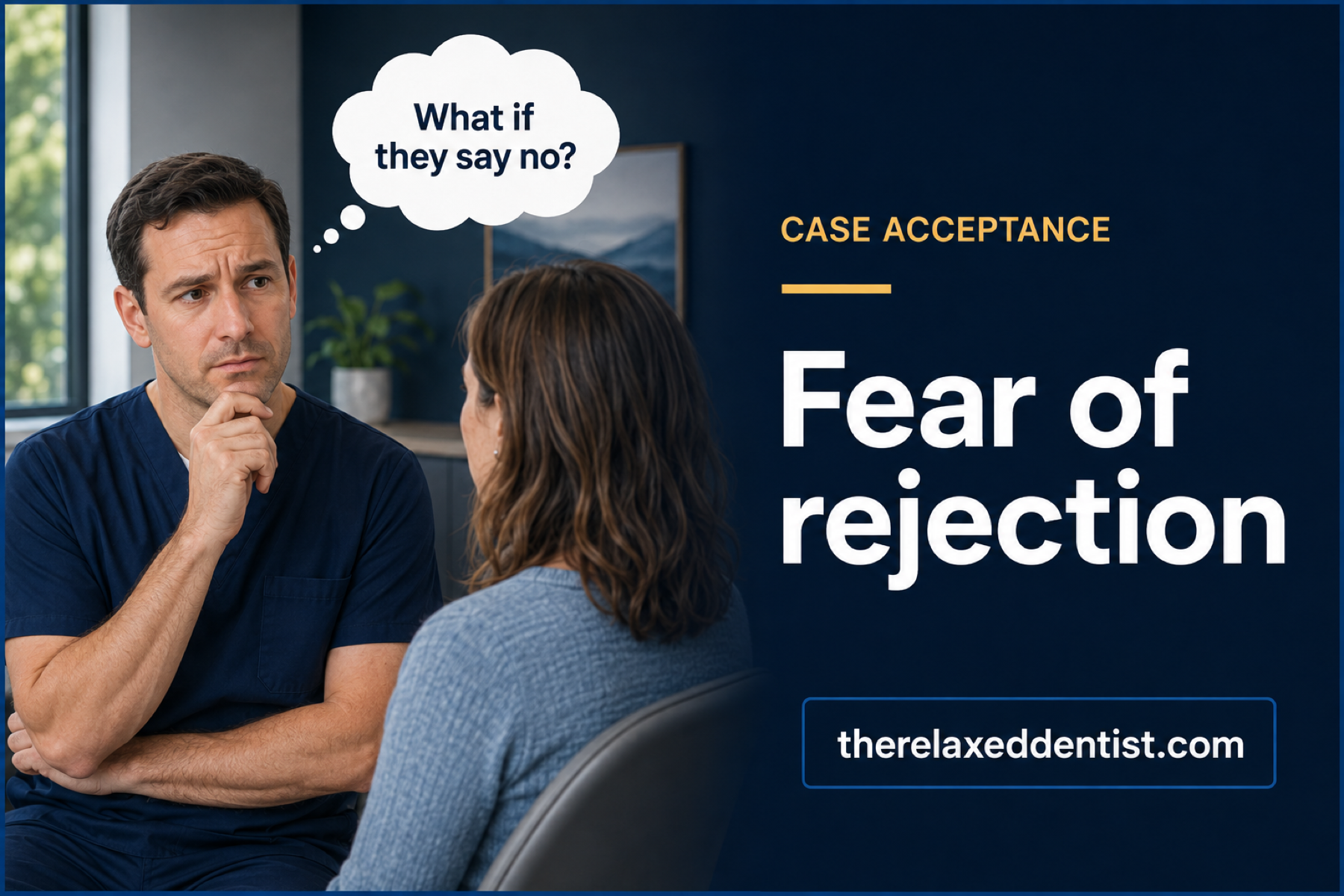
Have you ever under-diagnosed because you felt that the patient wouldn’t accept what they really needed?
If any of these are familiar, the problem isn’t your clinical ability. It’s almost certainly your communication skills.
A dentist I coached a few years ago is a good example. She was technically competent, but her communication was ineffective and, as a result, her practice was only marginally profitable. After one day of coaching on communication, her turnover increased by 60%, her consultations became shorter and her patients started opting for comprehensive treatment instead of patchwork.
The system I recommend for communication has four components: Rapport, Analyse and Agitate, Think and Explain. You can remember these four components using the acronym RATE.
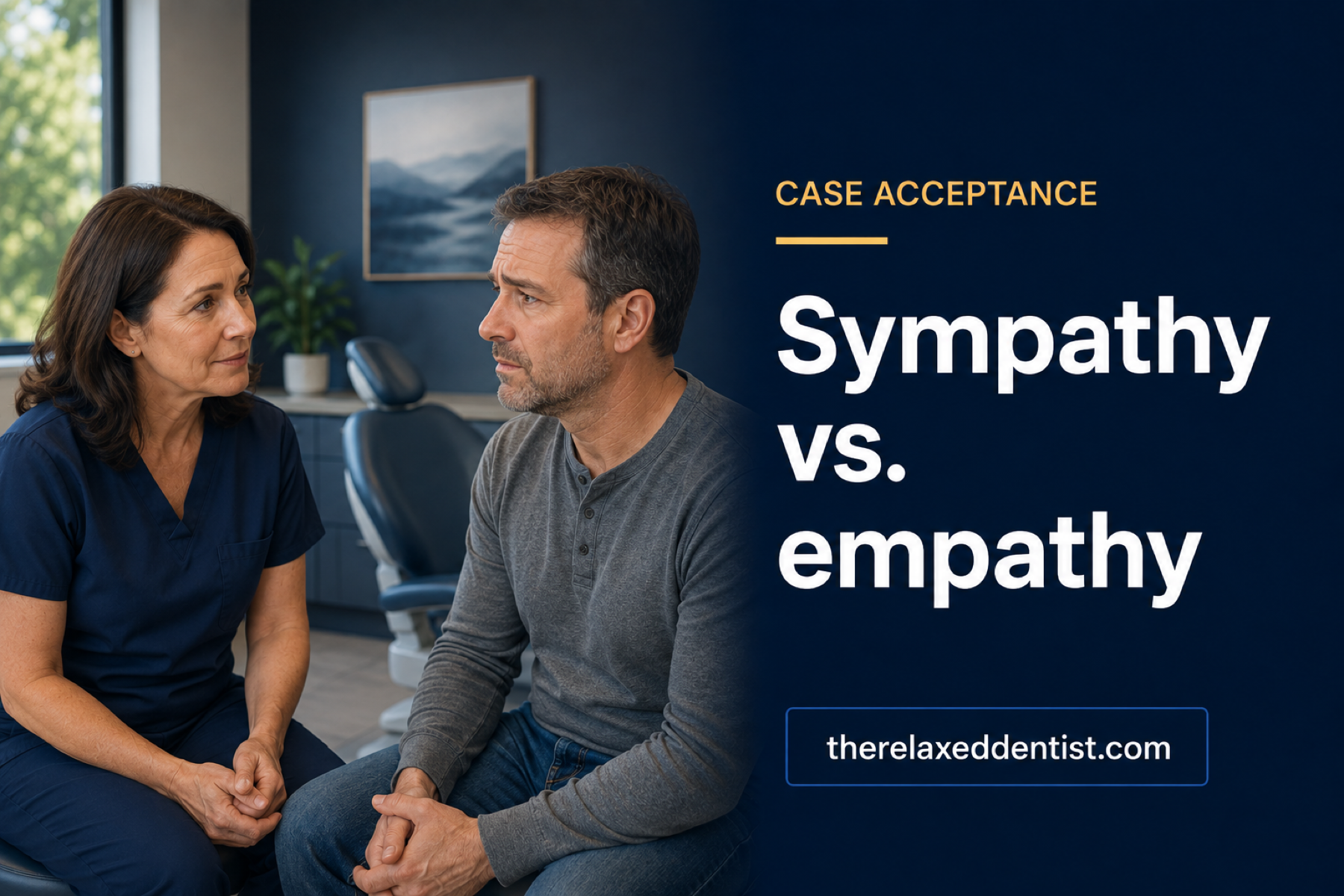
Rapport comes first, because without trust nothing else works. No amount of clever language will get case acceptance if patients don’t trust you. The encouraging thing about rapport is that it doesn’t require a lot of small talk or a particular personality type. There are two sets of factors that determine whether rapport is established: office factors and doctor factors.
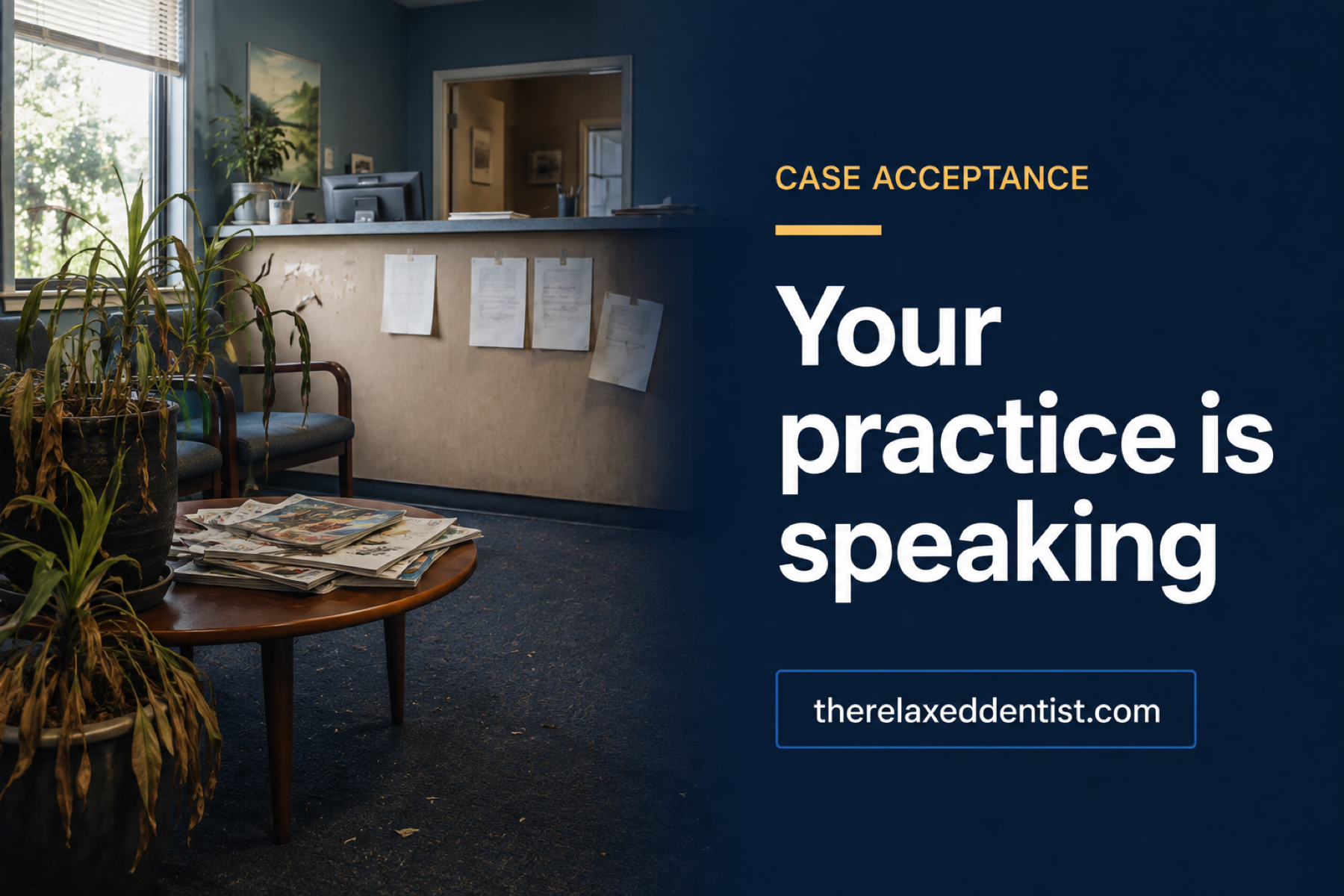
Office factors are your physical environment. New patients arrive with their antennae fully extended. They notice everything: the appearance of the waiting room, the way the receptionist greets them, the smell of the practice, the tidiness of the surgery and all the little details. Each of these details answers a question in the patient’s mind: Can I trust this place?
Doctor factors are about you: how you present yourself and how you interact with the patient. That includes your appearance, the way you introduce yourself, your body language, your eye contact and even where you sit. All these things contribute to whether the patient feels safe and understood. These behaviours can be learned and refined, and the rewards for getting them right are huge.
When both sets of factors work together, rapport isn’t something you have to sweat over. It happens quickly and naturally. It can be as quick as love at first sight. Once rapport is there, the remaining three steps become easier.
The Analyse and Agitate step is where many dentists struggle. It’s not just about identifying clinical problems because you already know how to do that. It’s about communicating what you’ve found to the patient in a way that they understand.
Patients can’t understand the technical details of their problems, but they absolutely must understand the seriousness of those problems. A patient who gets out of the chair with a vague sense that “something needs fixing” is very different from one who understands that their situation is serious and that inaction carries potentially heavy consequences.
Helping patients understand the significance and urgency of what you’ve found is one of the most valuable skills a dentist can develop. There are several easily learnable techniques you can use during an examination to help patients appreciate the significance of what you’ve found.
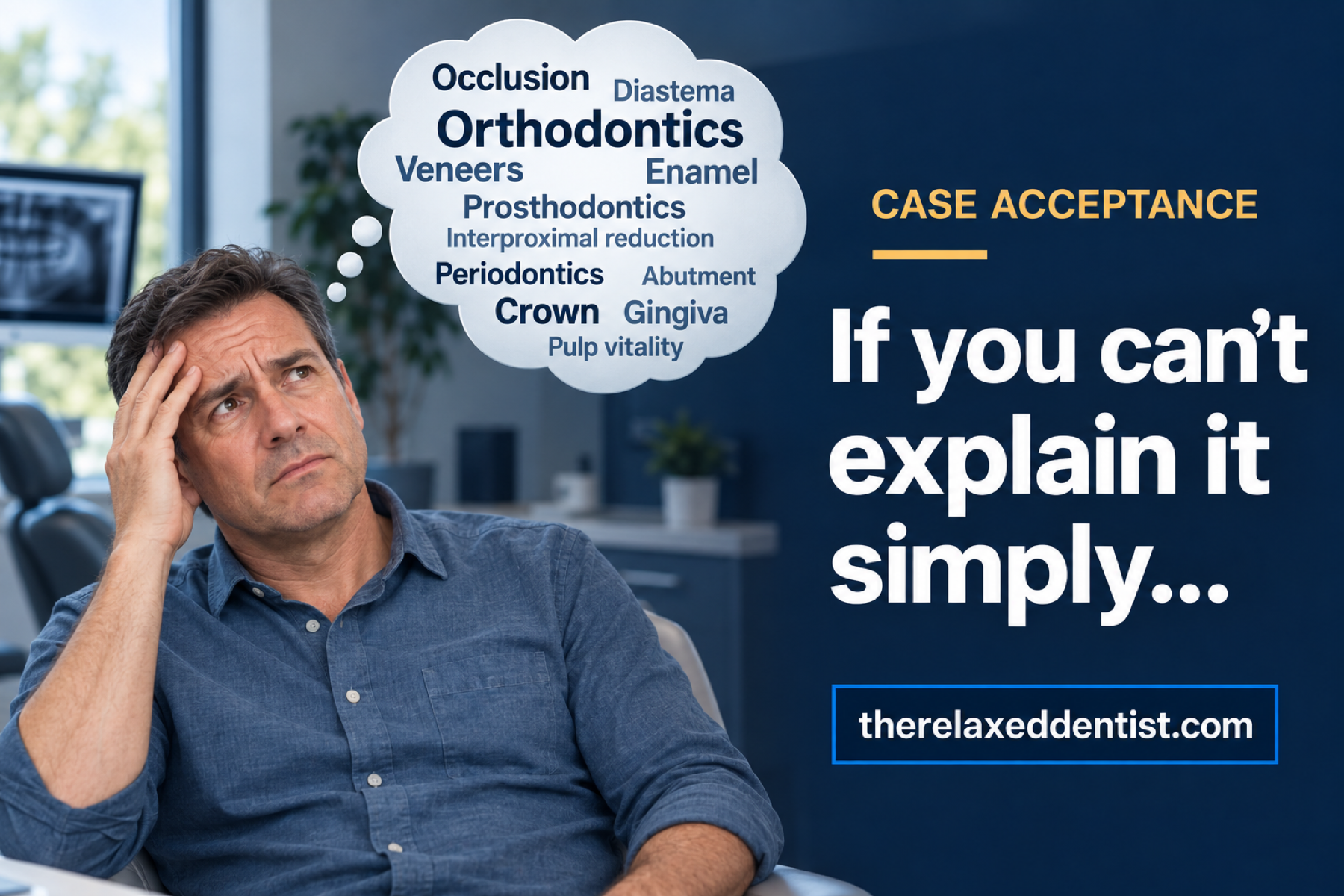
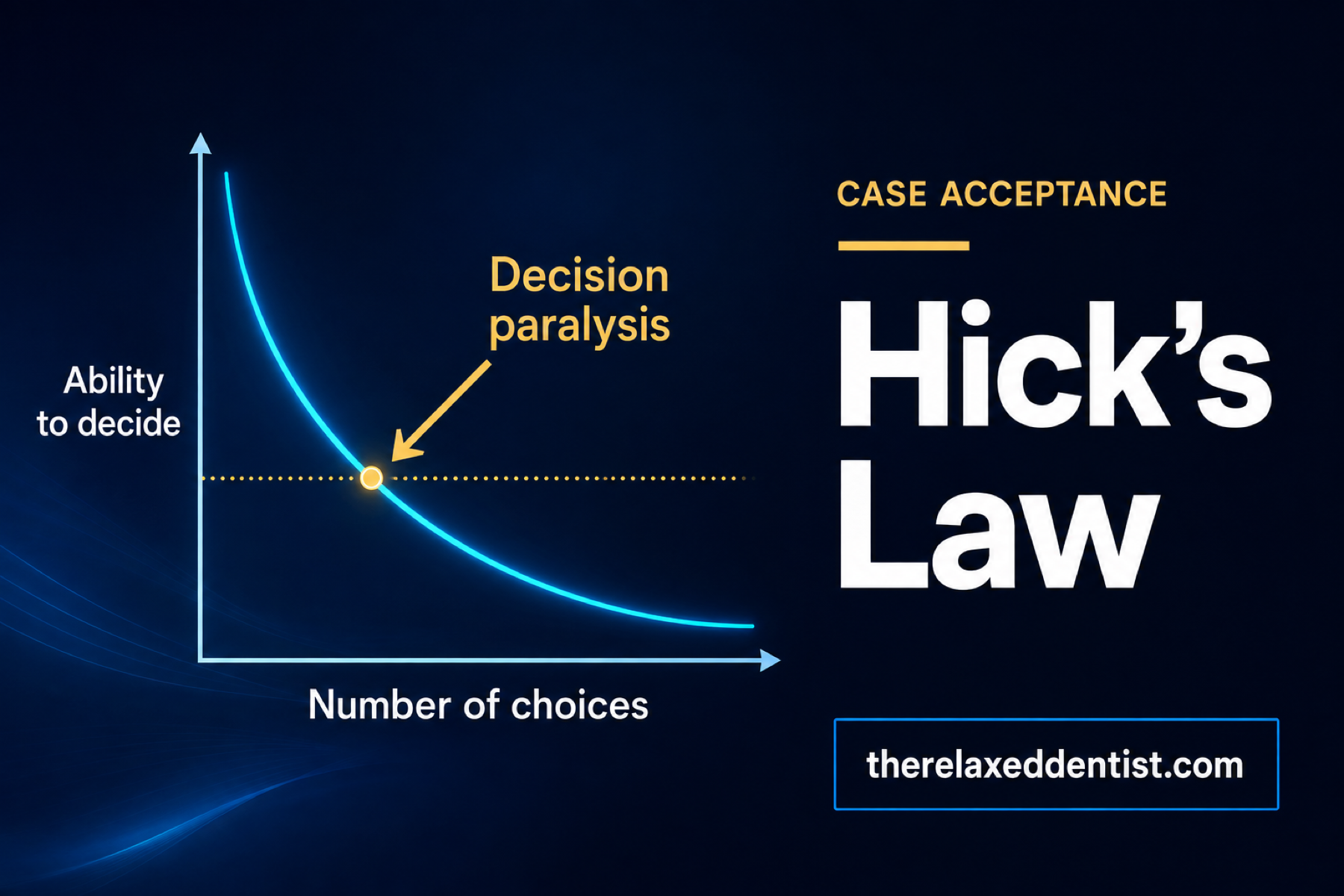
The next step is to think. Before you open your mouth to discuss treatment, there are four things you must have crystal clear in your own mind. If you haven’t thought these things through, your explanation will come out muddled and the patient will become confused. People rarely commit to treatment when they’re confused.
The four things you need to have clear in your mind are the ideal treatment option, a compromise treatment option (not as good as the ideal option but still acceptable), the costs of each option, and any warnings or risks the patient needs to be aware of. That’s all, but each of them matters.
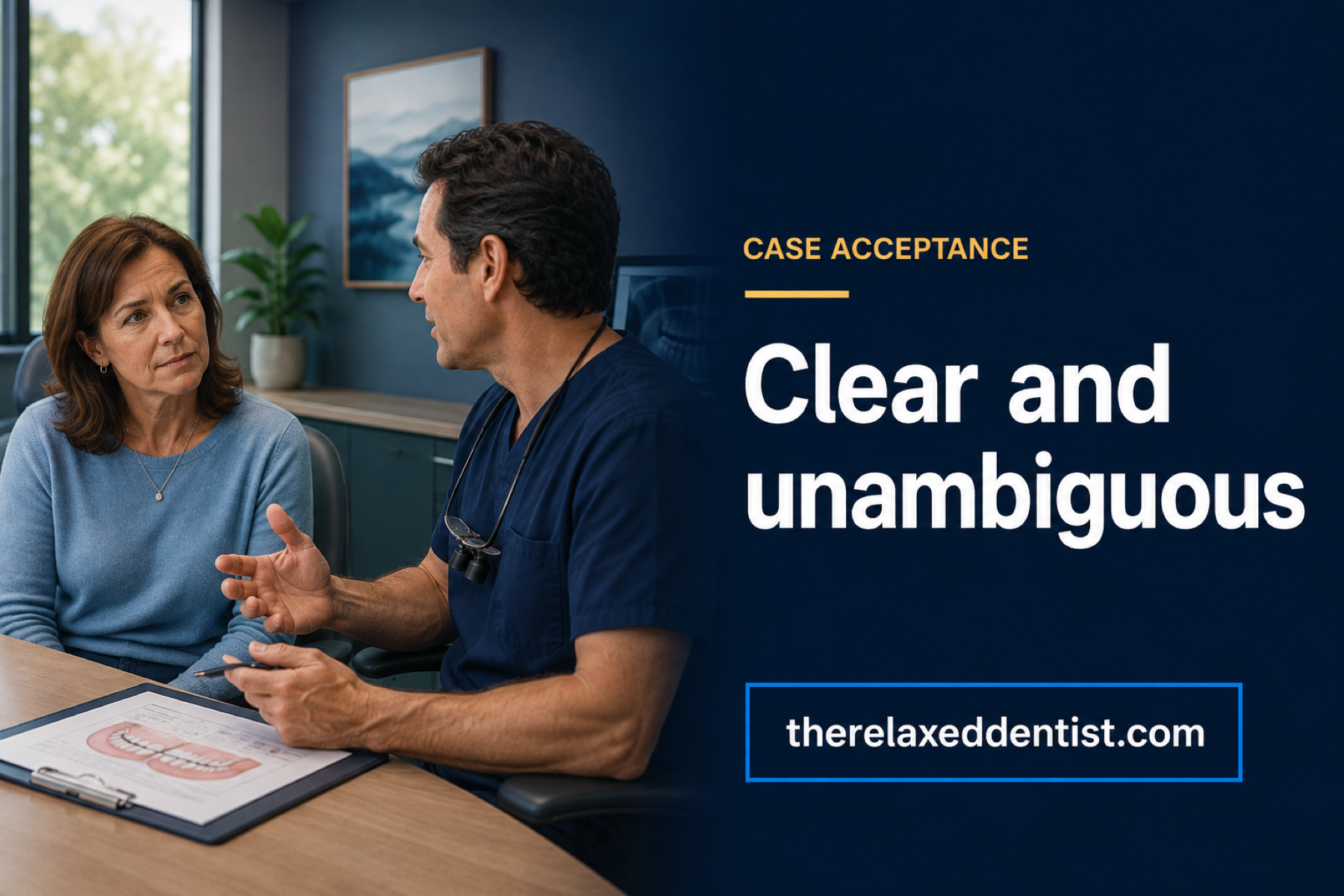
When you start the explanation with those four things clearly in mind, you’ll speak concisely and confidently and the patient will follow you with ease. This leads to the Explain step, which is surprisingly brief.
Explaining treatment options to a patient, even for complex cases, should take no longer than two minutes and preferably closer to one. That might sound impossible if you’re used to lengthy treatment discussions. It’s important to realise that long explanations aren’t a sign of thoroughness. They’re usually a sign that you’re boring the patient by being too technical or trying too hard to justify yourself.
The Explain step has five parts. You begin by describing the patient’s situation briefly in plain English. Then you present the compromise option, followed by the ideal option. At that point you ask a closing question and then wait for the patient to decide. Once the patient has indicated which option they prefer, you explain the relevant warnings and risks before they make a final decision and consent to treatment.
That’s the entire Explain step. The reason it can be so short is that all the groundwork has been done. Trust is established and the patient understands the seriousness of their situation. By the time you reach this step, you’re not convincing them of anything. You’re simply presenting the treatment alternatives concisely so the patient can make an informed decision.
There’s more to each of these steps than I can cover here and the details are where things get really interesting. But even understanding the framework tends to shift the way dentists think about their consultations.
If your practice isn’t where you’d like it to be, it may be worth taking a break from clinical courses and investing some of that time and energy in communication training instead. I teach dental communication skills through an online course and in-office seminars.
The benefits are significant, both in financial terms and in the quality of dentistry you get to do every day.














An appointment running 25 minutes late. No explanation, no apology. My first visit to a new medical practice reminded me how easily we can damage a patient’s first impression before care even begins.