When Less Is Better:
Fewer instruments, fewer steps, fewer costs, fewer decisions
Dr Mark Hassed | The Relaxed Dentist
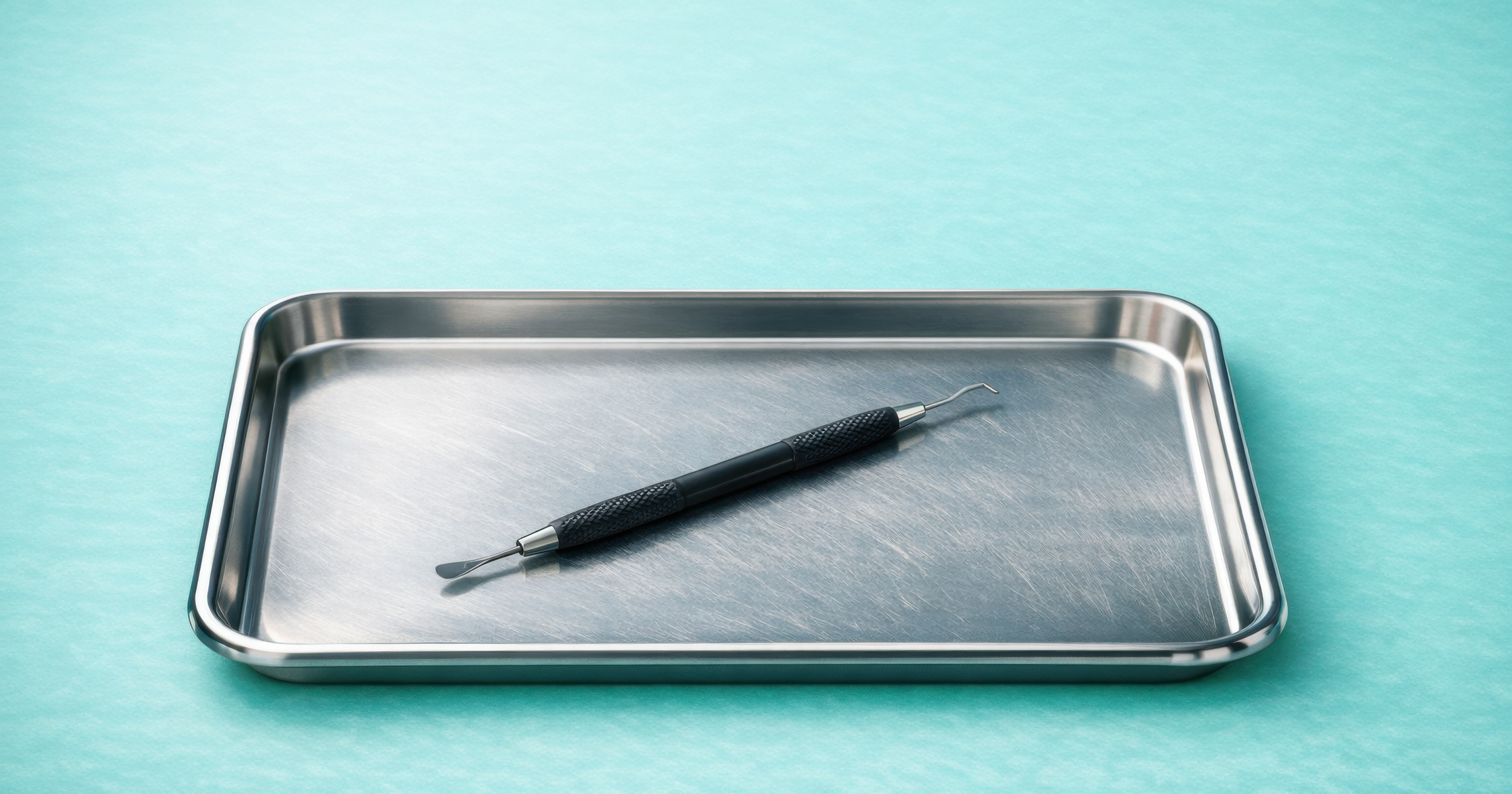
Many dentists work harder than they need to.
They feel overloaded and pulled in many directions, even on days that look straightforward in the appointment book. The operatory feels busy and they never quite settle into the smooth rhythm they hoped for.
The solution isn’t more systems, more instruments, or more efficiency tricks. It’s something simpler, and far more liberating.
This article explores the freedom that comes from doing dentistry with less — fewer instruments, fewer materials, fewer steps, fewer procedures, fewer decisions — and how this can transform the way your day feels.
The freedom of minimalism in dentistry
Minimalism in dentistry isn’t just about stripping things away. It’s about discovering what it’s like when everything in the operatory has a purpose. When the bench is clear, the instruments are familiar, and the workflow is simple, possibilities open up.
A minimalist setup and mindset creates a kind of mental spaciousness. You’re doing dentistry simply and it is enjoyable. A flow state.
Minimalism works in dentistry for the same reason it works in every part of life: when you remove what doesn’t matter, everything that does matter gets sharper focus. People who simplify their homes, wardrobes, or schedules all experience a sense of clarity they didn’t know they were missing.
Dentistry is a more concentrated version of that truth. The operatory is a small room filled with hundreds of micro‑decisions, each one competing for your attention. When you reduce the number of instruments, materials, and steps, the mental load drops.
The tray setup that changed everything for me
Six months after I bought my first practice, I had a moment that changed the way I thought.
In the practice I bought, the instrument trays came loaded with ten instruments. I didn’t question it. I simply inherited the system and kept moving — tray after tray, day after day, sterilise, reset, repeat.
Then one morning I actually looked at the tray. Not the quick glance you give something familiar, but the kind of look that brings clarity. I realised that I wasn’t using half of the instruments on the tray. Five instruments had been travelling on every single tray back and forth to the autoclave for six months without ever touching a tooth.
The superfluous instruments weren’t supporting my work — they were diluting it. It was a mistake but it also produced a revelation. It opened my mind to looking hard at everything I was doing.
Fewer instruments make better hands
Dentists sometimes believe they need the perfect instrument for every contour and every angle in a restoration. But, if you want the perfect instrument for every scenario, you will need a ton of them. In one practice I visited nurses laid out fifteen hand instruments for a simple Class II restoration, as if the procedure might suddenly transform into something exotic.
Minimalism offers a different kind of freedom. Let’s say instead of five composite shaping instruments you decide to have just one. You use it many times every day. You learn its limits. You learn its possibilities. You learn how to make it do exactly what you want.
The instrument doesn’t change. You do. Your hands become more skilled. Having just one instrument creates the conditions for mastery.
It frees you from the burden of perfectionism — the belief that you must have the perfect tool for every situation — and replaces it with something far more powerful: the ability to make one instrument feel like an extension of your hand.
This is the paradox at the heart of minimalism: when you rely on fewer tools, you become better with the ones that remain.
Mastery in six burs
There’s no better example of this than burs. Most dentists have drawers full of them — every shape, every grit, every variation that might be useful one day. But the irony is that the more options you have, the less familiar you become with any of them.
My own bur kit, for example, has served me for years with just eight burs — and if I didn’t do inlays or minimal intervention dentistry, I could comfortably work with six. Not because six is a magic number, but because the discipline of choosing forces me to understand what I actually need.
When you use the same burs every day, something subtle but powerful happens. Your hands learn them. Your eyes anticipate them. You stop second‑guessing. You stop rummaging through a dozen shapes trying to find the one that matches the picture in your mind. The bur becomes an extension of your intention, not an object you have to manage.
Minimalism turns repetition into refinement. It turns familiarity into fluency.
It turns a small bur kit into an advantage. Fewer bur changes equals less lost time. The real freedom is this: once you master a handful of burs, you realise you never needed the rest.
Material minimalism: the freedom of less choice
Most dentists use far more materials than they need. Composite systems, bonding agents, cements, liners, opaques, opaquer‑tints, flowables in every shade — the shelves fill up quickly, and once they’re full, they tend to stay that way.
Just like with instruments and burs, the more options you have, the less familiar you become with any of them.
When you commit to a small, well‑chosen set of materials — one composite system you trust, one bonding protocol you know intimately, one cement — you learn exactly how they handle. You can use them with your eyes closed.
Minimalism in materials isn’t about limiting what you can do. It’s about removing everything that gets in the way of doing good work in the simplest way possible. A smaller selection of materials doesn’t reduce your capability. It reduces your mental load.
The procedures we inherit without question
Minimalism isn’t only about the instruments and materials. It’s about the rhythm of the work itself — the often unquestioned routines that shape your day. When I was at university, I was taught that a root filling required three appointments. That was the rule.
Because I respected the people who taught me, I followed it without question. For years. Three visits. Three rounds of setup, anaesthetic, rubber dam, irrigation, dressing, re‑entry. It felt right because it was what I’d been taught.
Then, years later, I attended a seminar where I learned about single‑visit root fillings. I learned that the success rate was the same or better in many cases. This meant fewer visits for the patient and less chair time for the dentist. I remember sitting there thinking: How many hours of my life — and my patients’ lives — have been spent on steps that didn’t need to exist?
That was the moment I understood that minimalism isn’t just physical. It can also be procedural. It’s the weight of inherited habits that no one has re‑examined in decades. Are you doing anything because your first boss used to do it that way?
Minimalism in dentistry is about doing the right work with the fewest, simplest steps possible consistent with a quality outcome. I’ve written an article on how to do a crown preparation in 30-minutes. You can find it here.
The economics of doing less
One of the least appreciated benefits of minimalism is the way it shapes the economics of a practice. When you work with fewer instruments, fewer materials, and fewer moving parts, the financial load of dentistry becomes lighter in ways you feel every single day.
Operatories become smaller because they no longer need to house cupboards full of rarely used items. Storage rooms shrink because there’s simply less to store. Inventory becomes leaner and more intentional, which means less money sitting idle on shelves and far fewer materials expiring before they’re ever opened. The practice stops behaving like a warehouse and starts behaving like a workspace.
The day becomes cheaper to run as well. When there’s less to set up, less to pack down, and less to sterilise, the staff’s time stretches further. The sterilisation room stops feeling like a bottleneck. The whole practice moves with a more efficient rhythm causing the overhead to drop without anyone feeling like they’re cutting corners.
When the team breathes easier
Minimalism changes how the day feels for the people around you.
When there are fewer instruments to lay out, fewer materials to hunt for, and fewer moving parts to manage, the work becomes easier for everyone. The nurses move through their routines with more ease. The practice settles into a rhythm.
There’s a kind of quiet relief that spreads through a team when the environment is simple. A minimalist practice is easier to run, easier to teach, and easier to trust. New staff find their footing faster because there’s less to memorise and fewer exceptions to navigate.
It’s about removing everything that gets in the way of doing your best work.
The freedom to focus on what you do best
There’s another layer to minimalism that has nothing to do with instruments or materials. It’s the freedom to choose the kind of dentistry you want to do.
For years I avoided dentures. Not because I couldn’t do them, but because they drained my energy. I also chose not to place implants. My local oral surgeon did them beautifully, and referring those cases allowed me to concentrate on the work that felt natural in my hands — crowns, restorative dentistry, the procedures where I felt most most effective.
Letting go of those procedures didn’t make my scope smaller. It gave me more time for the work I enjoyed, more confidence in the outcomes, and more space to refine the skills that mattered to me. The practice became simpler to run, simpler to equip, and simpler to staff. And I became a better dentist because my attention wasn’t scattered across procedures that didn’t suit me.
An aspect of minimalism is about narrowing your field until what remains is the work that brings out your best. When you stop trying to be everything to everyone, you create the conditions for mastery — and the kind of professional satisfaction that comes from only doing the work you’re excellent at.
The realisation at the heart of it all
Minimalism isn’t truly about having fewer things. It’s about removing a weight you didn’t realise you were carrying. The unnecessary decisions. The inherited routines. The instruments that travel with you but never touch a tooth. The procedures you do out of habit rather than conviction.
Once those things fall away, you see the work differently. You think differently. The realisation that sits quietly at the centre of all this is straightforward: you were never short on time or skill or capacity. You were simply surrounded by more than the work required.
Minimalism gives you back the freedom that was there all along — the freedom to focus, to enjoy the day, and to practise with a sense of clarity. When you remove the extraneous, what remains is the version of dentistry you always hoped was possible: intentional and more profitable.
The freedom was never in adding more. It was in letting go.
If this way of practising speaks to you, I’d love to help you bring it into your own practice. You don’t need to overhaul everything. You just need to start with one small shift. And I’m here when you’re ready to take it.
If this article has sparked ideas about how your days could run more smoothly, you might find my online course or in‑office training helpful. No pressure at all. And if you’d like to stay connected, feel free to subscribe — I share practical ideas like this from time to time.
Best wishes for your success, Dr Mark Hassed (The Relaxed Dentist)