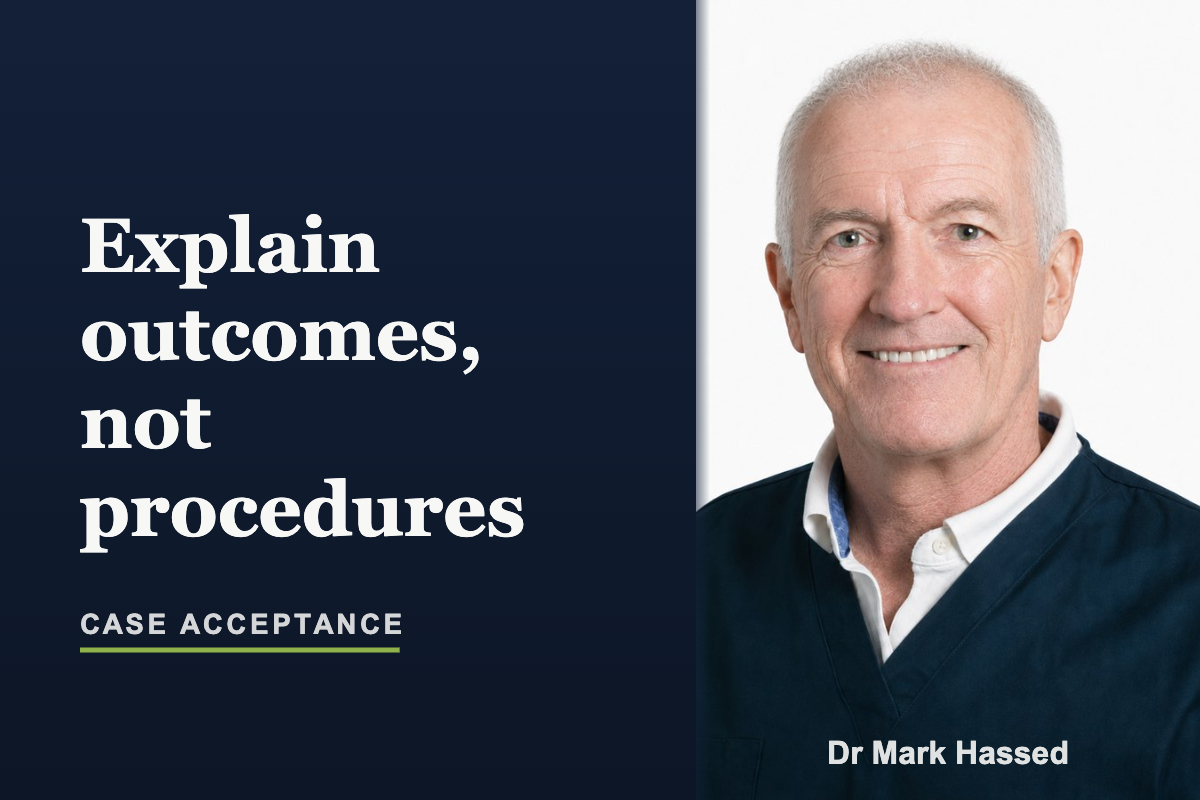
Explain outcomes, not procedures
Patients are looking for outcomes, not explanations of the nuts and bolts.
Outcome‑Based Communication
My old mentor, Omer Reed from Phoenix, used to say something I’ve never forgotten:
“Patients want their teeth to look good, feel good, and last a long time.”
He said it with a kind of quiet certainty, as if it explained the whole profession. And in many ways, it does. Patients aren’t buying procedures.
They’re buying outcomes.
Why This Matters
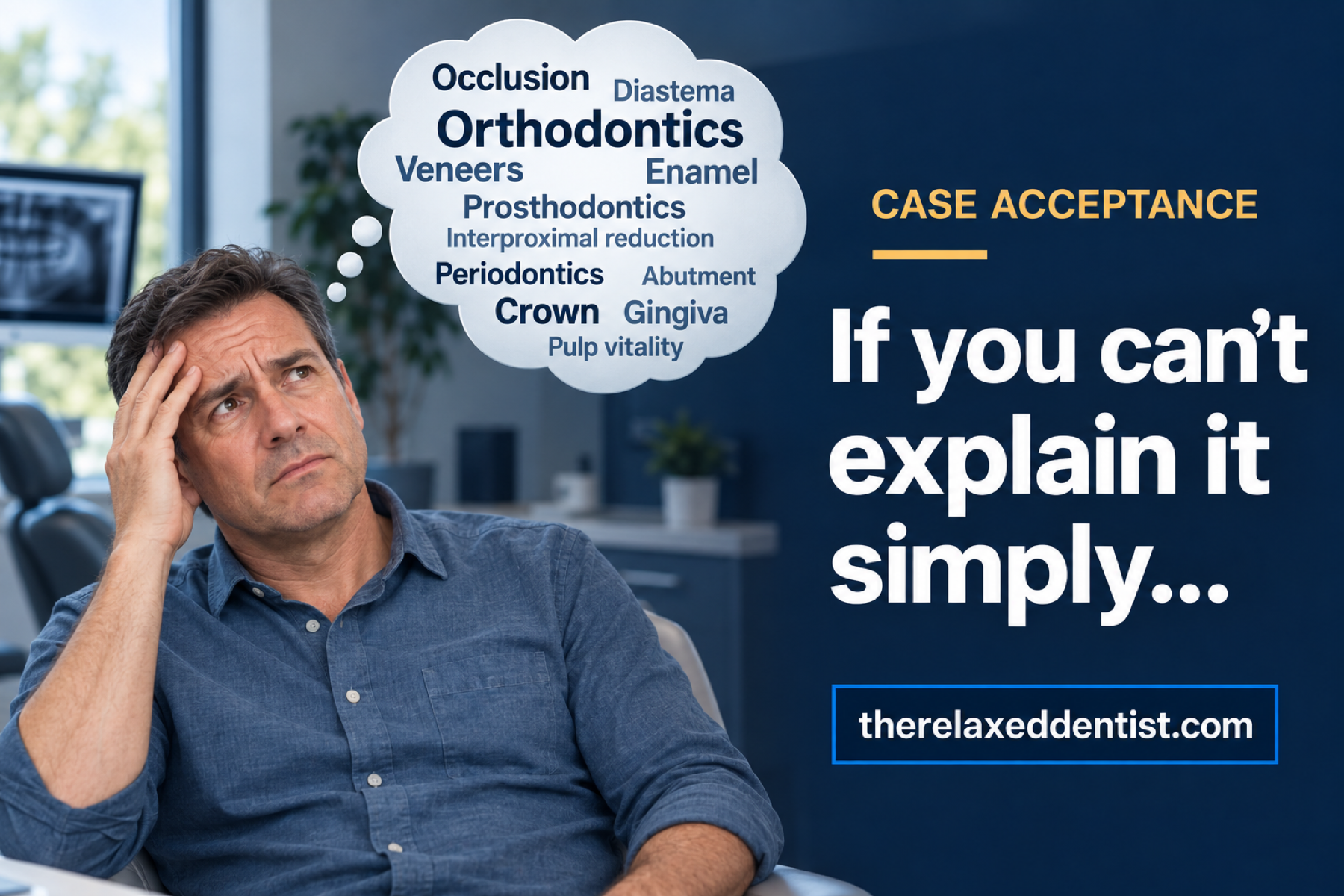
When we talk about the procedure, patients often drift. They hear the words, but they don’t feel the meaning.
When we talk about what the treatment gives them, something shifts. They relax. They understand. They can see themselves on the other side of the problem.
This becomes especially important when a patient asks, “Do I really need that?”, when you’re discussing higher‑value treatment, or when someone looks unsure.
These are the moments when technical accuracy isn’t enough. They need a reason that makes sense in their world, not ours.
Real‑World Moments
Take a crown. “It protects the tooth” is true, but it’s abstract. Patients don’t buy protection. They buy confidence. A crown stops a crack from spreading so they can chew comfortably without worrying about the tooth breaking. That’s the part that matters to them.
Or a root canal. “It removes the infection” is a clinical description. The outcome is that the throbbing stops and they can finally sleep again. That’s the moment they care about — the moment their life gets easier.
Another example is periodontal treatment. “It cleans the pockets” is technical. The outcome is that their gums stop bleeding and their breath improves. Suddenly they can talk, laugh, and eat without self‑consciousness. That’s the human story behind the procedure.
What to Focus On
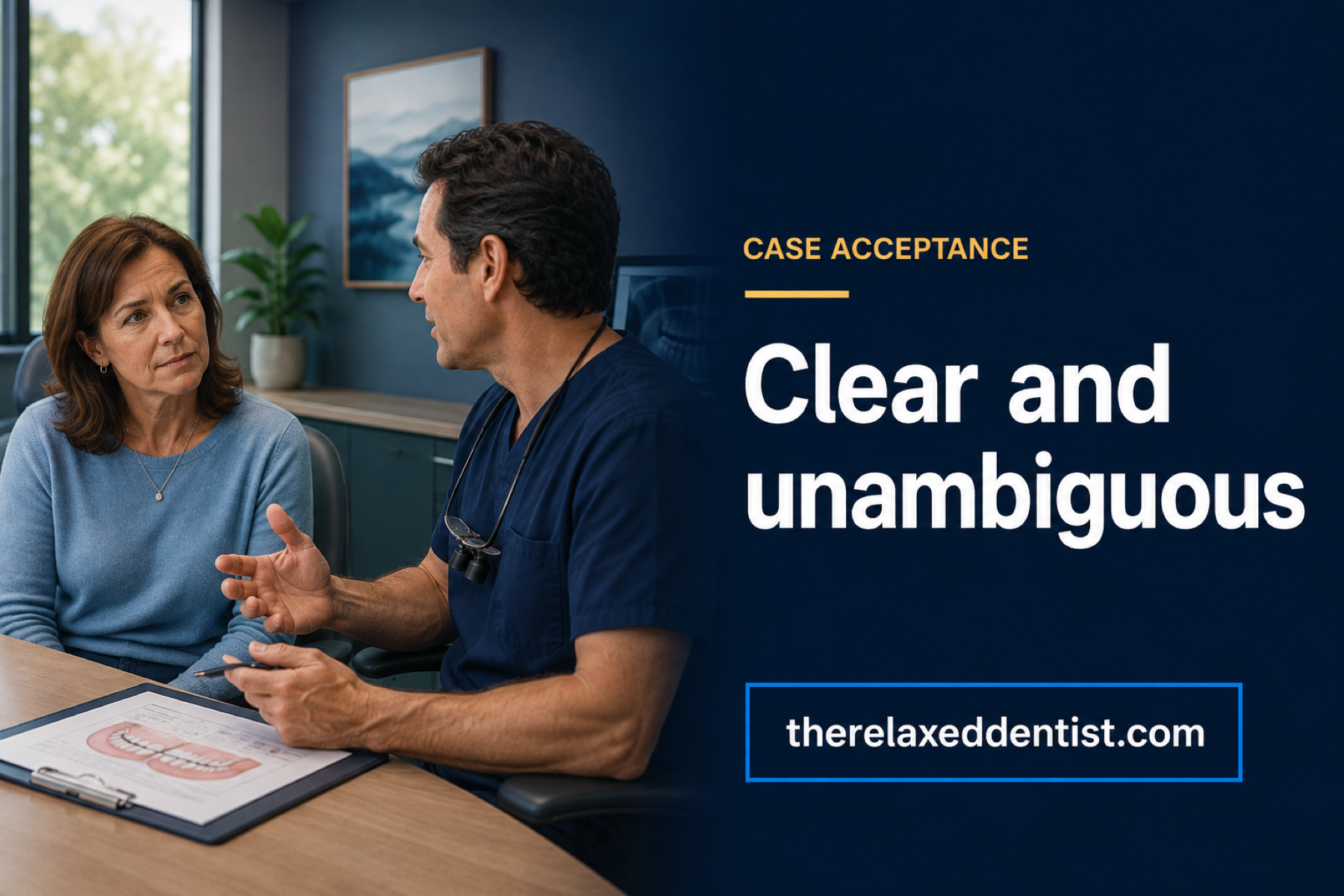
There’s only one habit to build: identify the outcome the patient actually values. Keep it simple. Keep it human. And let the technical detail come later, only when they ask for it.
Bringing It All Together
At its core, outcome‑based communication is simply returning to what Omer taught all those years ago. Patients want to look good, feel good, and have their teeth last a long time.
When we speak to those outcomes — not the procedure — the whole conversation becomes clearer, and more grounded in what truly matters to them. And when that happens, acceptance of treatment improves.




Are you offering patients the best treatment, or only what you think they can afford? A retired schoolteacher with a battered car reminded me why those assumptions can be so misleading.